
While travel when was the last time you truly got lost? I’m not talking about taking a wrong turn in a mall parking lot — I mean really lost. The kind of lost where you don’t know what street you’re on, what direction you’re facing, or how far you are from your destination.
For me, that happened recently — and intentionally.
I decided to spend a week traveling without using Google Maps. No GPS, no blue dot guiding my steps, no instant recalculations. Just me, a paper map, and the kindness of strangers. The destination: Lisbon, Portugal — a city famous for its hilly streets, maze-like alleys, and postcard-perfect viewpoints.
Why Lisbon? Because if I was going to get lost, I wanted to do it somewhere beautiful.
Day 1: The Panic of the Blue Dot Withdrawal
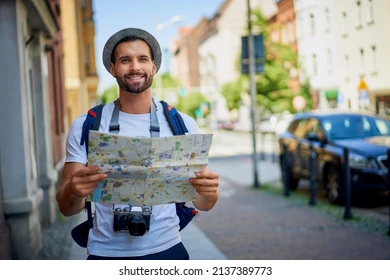
On my first morning, I tucked my phone deep into my bag and pulled out a folded city map that I’d bought from a tiny newsstand. It felt strange — outdated even — like I was holding a relic.
Within 15 minutes, I was hopelessly lost. The narrow cobblestone streets of Alfama twisted in every direction, and my map didn’t include half of them. I stared at it like it might magically come to life, but no — I was on my own.
My first instinct was to grab my phone and open Google Maps. Muscle memory. I had to physically stop myself. So instead, I did something I hadn’t done in years: I asked a stranger for directions.
The old man I approached didn’t speak English, but he smiled and pointed me up a hill, miming a right turn. I nodded, thanked him, and followed. I ended up not at my intended café, but at a quiet square with orange trees and an elderly woman feeding pigeons. I sat on a bench, breathing in the scent of coffee and baked pastries, realizing that getting lost wasn’t so bad after all.
Day 3: Conversations Instead of Calculations
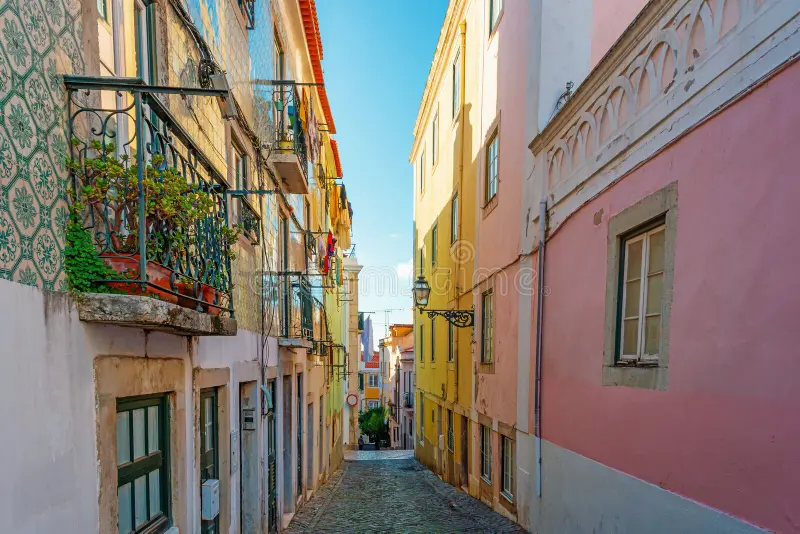
By the third day, I was starting to enjoy my new, mapless rhythm. I wandered through side streets, asked locals for help, and discovered parts of the city that weren’t on any travel guide.
One afternoon, I stopped at a tiny family-run restaurant that I would’ve missed entirely if I’d followed a GPS route. The owner, a cheerful woman named Rosa, served me a bowl of caldo verde soup and laughed when I told her about my “no-Google” experiment.
She said something that stuck with me:
“You see more when you stop looking for the fastest way.”
And she was right. Without constant red pins and blue routes, I stopped rushing. I noticed how sunlight hit the tiles on the buildings, how the tram bells echoed through the streets, how people waved from balconies.
Each wrong turn led me to something unexpected — a street artist painting azulejos, a viewpoint that wasn’t on any blog, a bookstore that smelled of old paper and rain.
Day 5: The Frustration Returns
Of course, it wasn’t all poetic moments.
There were times when I was tired, sweaty, and just wanted to find the place. Once, I walked for nearly an hour trying to reach a recommended bakery — only to realize I had been going in the wrong direction the entire time.
Frustrated, I sat on a curb, debating whether I should “cheat” and turn my data back on. But then a young couple noticed my confusion and offered to help. They not only pointed me the right way but walked with me to the bakery, chatting about their city along the way.
That small interaction turned my mood around completely. When we said goodbye, I realized that technology often robs us of these human moments. Google Maps might get me there faster, but it wouldn’t introduce me to new friends.
Day 7: Rediscovering the Joy of Discovery
By the end of the week, I had become strangely confident in my disconnection. My paper map was now covered in notes, circles, and coffee stains — a physical record of my wanderings.
I began to rely on landmarks and intuition instead of directions. I could recognize certain street corners, colors, and even the smell of bakeries that meant I was close to home.
There was something deeply satisfying about earning my sense of direction. I wasn’t just moving from point A to B — I was learning the rhythm of the city itself.
On my last evening, I watched the sunset from Miradouro da Senhora do Monte, a spot I found entirely by accident. As the city glowed gold beneath me, I realized that the week hadn’t just changed how I navigated — it had changed how I traveled.
What I Learned from Getting Lost
- Slow travel is real travel.
Without the pressure of a glowing blue line, I moved at my own pace and appreciated the small things. - Connection beats convenience.
Asking for directions sparked real conversations — something a screen can’t do. - It’s okay to be uncomfortable.
The anxiety of not knowing where you are can lead to your most memorable experiences. - Maps are guides, not commandments.
Sometimes the “wrong” way is exactly where you need to go.
Would I Do It Again?
Absolutely — but maybe not every trip. There’s value in tools like Google Maps, especially for safety and efficiency. But there’s also immense value in letting go of perfect navigation once in a while.
Traveling without Google Maps reminded me why I fell in love with travel in the first place: the unpredictability, the discovery, the small serendipities that make a trip unforgettable.
So next time you travel, try it — even just for a day. Put your phone away, grab a map (or don’t), and let the world surprise you.
Because sometimes, the best places can’t be pinned.

Leave a Reply